

Why Reinforced Concrete Pipe Still Sets the Standard for Builders
Discover why Reinforced Concrete Pipe (RCP) remains a trusted choice for stormwater drainage, road construction, and long-term infrastructure performance.
When it comes to stormwater drainage infrastructure, builders, contractors, engineers, and developers face a simple but high-stakes question: What material is built to last?
For decades, the answer has remained consistent: Reinforced Concrete Pipe (RCP).
RCP isn’t simply a traditional choice for underground drainage systems. It is a proven infrastructure solution with a documented history of long-term performance across residential subdivisions, highways, commercial developments, industrial sites, and municipal stormwater systems.
With the potential for a 100-year service life, Reinforced Concrete Pipe continues to set the standard for structural strength, hydraulic performance, durability, and long-term value. Its reputation for dependable performance is why RCP remains a trusted choice for modern drainage design and critical infrastructure projects.
Built Strong From Day One
One of the greatest advantages of Reinforced Concrete Pipe is its inherent structural strength.
RCP is engineered as a rigid pipe system capable of carrying significant loads through the strength of the pipe itself. Once properly installed, it is designed to perform under demanding conditions, including heavy traffic loads, deep burial depths, and challenging construction environments.
For contractors working under tight schedules or unpredictable site conditions, that built-in strength provides an important advantage. RCP offers confidence where structural performance matters most.
This makes Reinforced Concrete Pipe especially well suited for:
Highway and roadway drainage
Residential subdivision development
Municipal stormwater systems
Commercial and industrial sites
Culverts and crossings
Heavy-load infrastructure applications
Shape Stability You Can Trust
Flexible pipe systems rely heavily on the surrounding soil envelope and proper compaction to maintain structural shape and performance. Rigid Reinforced Concrete Pipe performs differently.
Because RCP is designed to carry loads through its own structural capacity, it offers exceptional shape stability in demanding underground applications.
Reinforced Concrete Pipe:
Resists deformation under heavy traffic loads
Performs reliably under deep cover
Maintains its shape in changing moisture conditions
Handles construction loads without significant distortion
Provides dependable structural performance over time
For roadway contractors and civil infrastructure professionals, that stability can contribute to more reliable long-term pavement and drainage system performance.
Consistent Hydraulic Performance
Effective stormwater management depends on predictable flow capacity, and RCP has long been a benchmark for gravity-flow drainage systems.
Its durable interior surface supports consistent hydraulic performance over decades of service. Unlike materials that may deform or change shape under load, properly designed and installed RCP maintains its geometry, helping preserve intended flow characteristics.
For builders, engineers, and municipalities, that means greater confidence in drainage performance during major rain events and demanding stormwater conditions.
Whether used for storm drains, culverts, roadway drainage, or underground water conveyance, RCP delivers the dependable hydraulic performance critical infrastructure projects require.
Durability That Outlasts Trends
Infrastructure is not the place for short-term thinking.
Reinforced Concrete Pipe is manufactured from strong, resilient materials designed for long-term underground service. It does not melt, warp from heat exposure, or degrade from sunlight in the same way some alternative materials can during storage and construction.
RCP also offers strong resistance to many common environmental and jobsite challenges, including:
UV exposure
Fire
Abrasion
Impact
Many soil and groundwater environments
Heavy construction conditions
When drainage infrastructure is expected to perform for generations, proven durability matters.
A Smarter Long-Term Infrastructure Investment
Upfront material cost is only one part of the equation.
While some drainage pipe alternatives may appear less expensive initially, Reinforced Concrete Pipe can deliver exceptional lifecycle value because of its long service life, structural reliability, and relatively low maintenance requirements.
For municipalities, developers, engineers, and transportation agencies, lifecycle performance can have a significant impact on the true cost of infrastructure.
Choosing RCP can help reduce concerns related to:
Premature replacement
Structural deformation
Unexpected maintenance
Drainage system failures
Roadway disruption
Long-term repair costs
That makes Reinforced Concrete Pipe more than a technical choice. It can also be a smart long-term financial decision.
Sustainable by Design
Sustainability is becoming increasingly important across the construction and infrastructure industries.
Reinforced Concrete Pipe is commonly manufactured using aggregates, cementitious materials, and steel reinforcement, with opportunities for regional sourcing depending on the manufacturer and project location. Concrete products can also be recycled or repurposed at the end of their useful service life.
For builders, developers, and infrastructure professionals focused on responsible material selection, RCP offers meaningful advantages through:
Long service life
Durable performance
Potential for locally sourced materials
Recyclability and repurposing opportunities
Reduced need for frequent replacement
Infrastructure that lasts longer can reduce the material use, construction disruption, and costs associated with premature replacement.
The Bottom Line: RCP Is Built for Long-Term Performance
Reinforced Concrete Pipe remains one of the most trusted solutions for gravity-flow drainage and stormwater infrastructure.
Its combination of structural strength, shape stability, hydraulic performance, durability, and long-term value makes it a dependable choice for builders who need infrastructure designed to perform for decades.
From residential developments and commercial sites to highways, municipal drainage systems, and major civil infrastructure projects, RCP continues to prove why it has set the standard for generations.
At Stateline Pipe & Products, we help contractors, developers, engineers, and project teams source dependable pipe and infrastructure solutions for projects throughout the Southeast. Whether you are planning a roadway project, subdivision, stormwater system, or large-scale civil development, our team is ready to help identify the right products for the job.
Need Reinforced Concrete Pipe for an upcoming project? Contact Stateline Pipe & Products to discuss availability, specifications, and project requirements.

Protecting the Threatened Manatee
The Florida manatee may no longer be endangered, but protecting this threatened species remains important. Discover how manatee grates help safeguard wildlife while supporting critical drainage infrastructure.
A few years ago, I heard a report while listening to business radio that brought some encouraging news: the Florida manatee had been removed from the Endangered Species List.
While that's certainly worth celebrating, the story doesn't end there. The manatee was not removed from federal protection altogether—it was reclassified as a threatened species. That's a significant improvement from the early 1970s, when manatee populations had declined dramatically and their future was uncertain.
Today, these gentle giants continue to inhabit Florida's coastal waters, rivers, and estuaries. Although their numbers have improved, protecting their habitat remains an important responsibility.
That's where infrastructure planning can play a role.
At Stateline Pipe & Products, we provide FDOT-approved Manatee Grates designed for drainage pipe installations in areas where manatees are known to travel. These specialized grates help prevent manatees from entering stormwater systems while allowing drainage infrastructure to function effectively.
We understand that project schedules matter, which is why we can often provide shop drawings within 24 hours—sometimes even the same day. Fabrication services and FDOT certifications are also available in a timely manner to help keep projects moving forward.
Many public works departments, road and bridge agencies, and civil engineering firms are still unaware that these products are readily available. If you live or work in a region with an active manatee population, we encourage you to help spread the word.
Protecting the manatee population is a worthwhile effort, and every thoughtful infrastructure decision can make a difference.
~ Wayne Atkinson

Reinforced Concrete Pipe: Tested by Time
For over 2,000 years, concrete has played a role in water conveyance. Learn why modern Reinforced Concrete Pipe (RCP) continues to be a trusted solution for storm drainage projects and infrastructure applications.
Reinforced Concrete Pipe
The conveyance of water from one place to another dates back thousands of years, all the way to the Roman Empire. Interestingly, so does the use of concrete structures to accomplish that task.
Few manufactured products can claim a history spanning more than 2,000 years while continuing to evolve and improve. Reinforced Concrete Pipe (RCP) is one of those products.
Over the years, concrete pipe has undergone significant advancements in both design and manufacturing. Today's RCP is produced using a process known as dry casting, which creates a strong, durable product capable of meeting the demands of modern infrastructure projects.
Automation has also transformed the industry. Manufacturers can now produce larger quantities of pipe more efficiently and cost-effectively than ever before. When working with a manufacturer that maintains inventory rather than producing strictly on a project-by-project basis, contractors often benefit from improved availability and faster delivery times. This can be a major advantage when project schedules are tight and staying on track is critical.
From a value standpoint, Reinforced Concrete Pipe remains one of the most practical and proven solutions for storm drainage conveyance. Unlike flexible pipe systems, RCP maintains its own structural integrity and does not rely on the surrounding soil envelope to provide strength.
Because RCP is a rigid pipe system, it is engineered to maintain its shape and performance over time. The structural capacity is built directly into the pipe through its concrete design and steel reinforcement. As a result, concerns related to pipe deformation and ovality are significantly reduced compared to flexible systems.
At Stateline Pipe & Products, Reinforced Concrete Pipe is where we focus much of our energy and expertise. Every day, we work to move the industry forward through product knowledge, training, analysis, and customer support.
If we can assist with your next storm drainage project, we'd welcome the opportunity to start the conversation.
~ Wayne Atkinson

Storm Drainage: Flexible or Rigid Pipe Systems
When designing a stormwater system, one of the first decisions is choosing between a rigid or flexible pipe system. In this article, Wayne Atkinson breaks down the key differences between reinforced concrete pipe (RCP) and HDPE pipe, helping engineers, contractors, and project owners better understand their options for storm drainage applications.
That is the question, isn’t it?
If you're designing a new stormwater system, what are your options?
Traditionally, there have been two primary choices for drainage pipe systems.
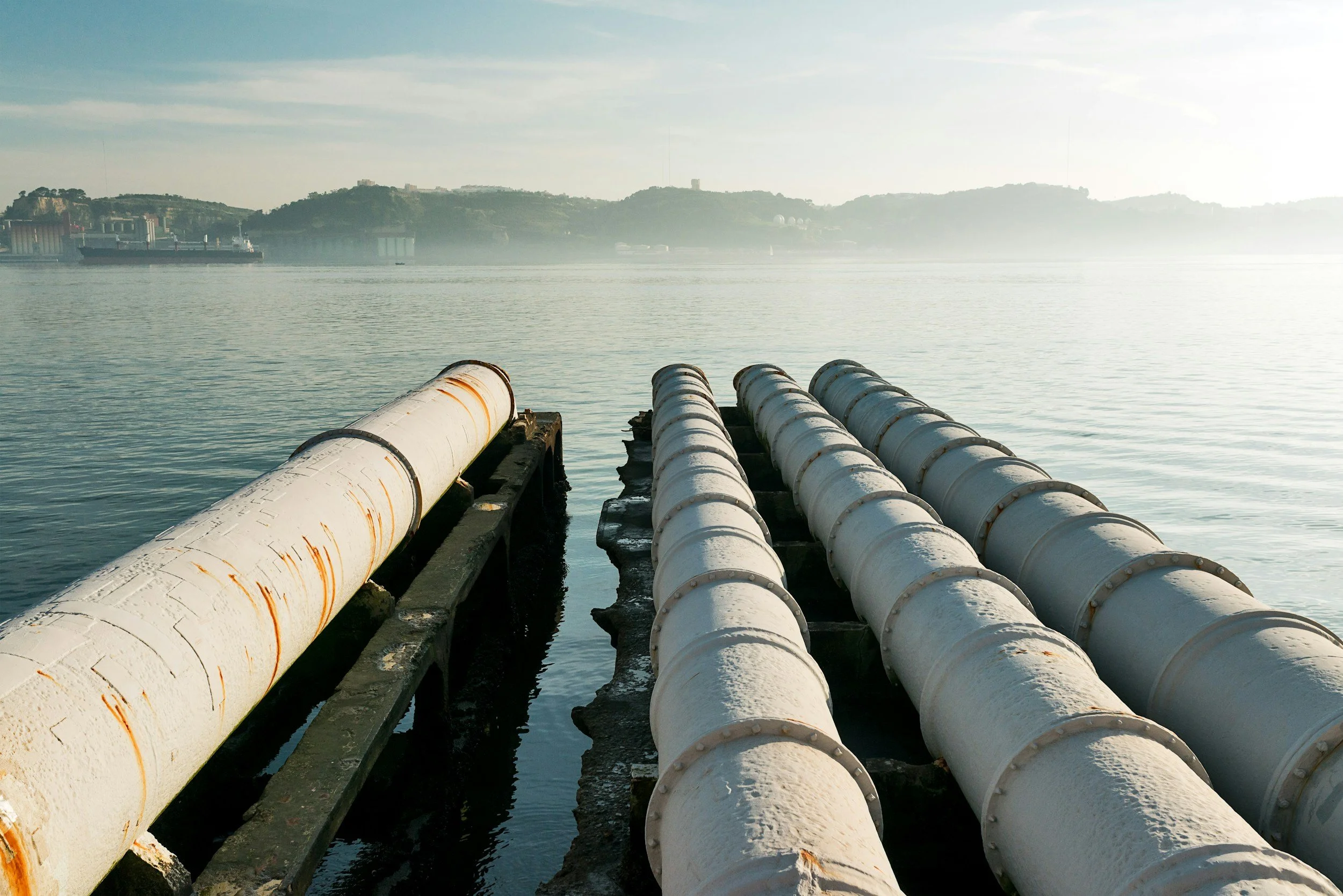
The first is Reinforced Concrete Pipe (RCP), commonly known as concrete pipe. This is considered a rigid pipe system. I often describe it as an underground horizontal structure because of the way it carries loads and maintains its shape.
RCP consists of two key components. The first is a dry-cast concrete mix designed for strength and durability. The second is a steel reinforcement cage embedded within the concrete. This steel reinforcement significantly enhances the structural integrity of the pipe, allowing it to withstand substantial loads over its service life.
The second option is a flexible pipe system. Unlike concrete pipe, flexible pipe is typically manufactured from high-density polyethylene (HDPE) and features an exterior corrugated design.
Those corrugations allow compacted soil to fill the spaces around the pipe, creating a soil envelope that contributes to the pipe's overall strength. In a flexible pipe system, the surrounding soil and the pipe work together structurally. As the soil moves, the pipe is designed to flex with it. In certain applications and site conditions, that flexibility can be a significant advantage.
In a future discussion, we'll explore other storm drainage products, including several semi-rigid pipe options available in today's market.
For now, I simply want to leave you with this understanding:
When it comes to stormwater infrastructure, the choice often comes down to two fundamental categories—rigid pipe systems and flexible pipe systems.
That is the question.
Which one will you choose?
If you have questions about your next project, let's start the conversation.
~ Wayne Atkinson